
The Nissan Patrol 320 vs 400 question is mainly about identifying two older 5.6-litre V8 specifications, then deciding which actual used vehicle makes sense for you. The number in an advert is not enough. Confirm the engine, original market, model year, transmission and condition before comparing prices.
For UAE buyers, that matters particularly when a Patrol has changed hands, arrived from another market or received newer-looking bodywork. A refreshed exterior does not establish what is under the bonnet. This guide explains the specification evidence and gives you a practical way to compare two shortlisted vehicles.
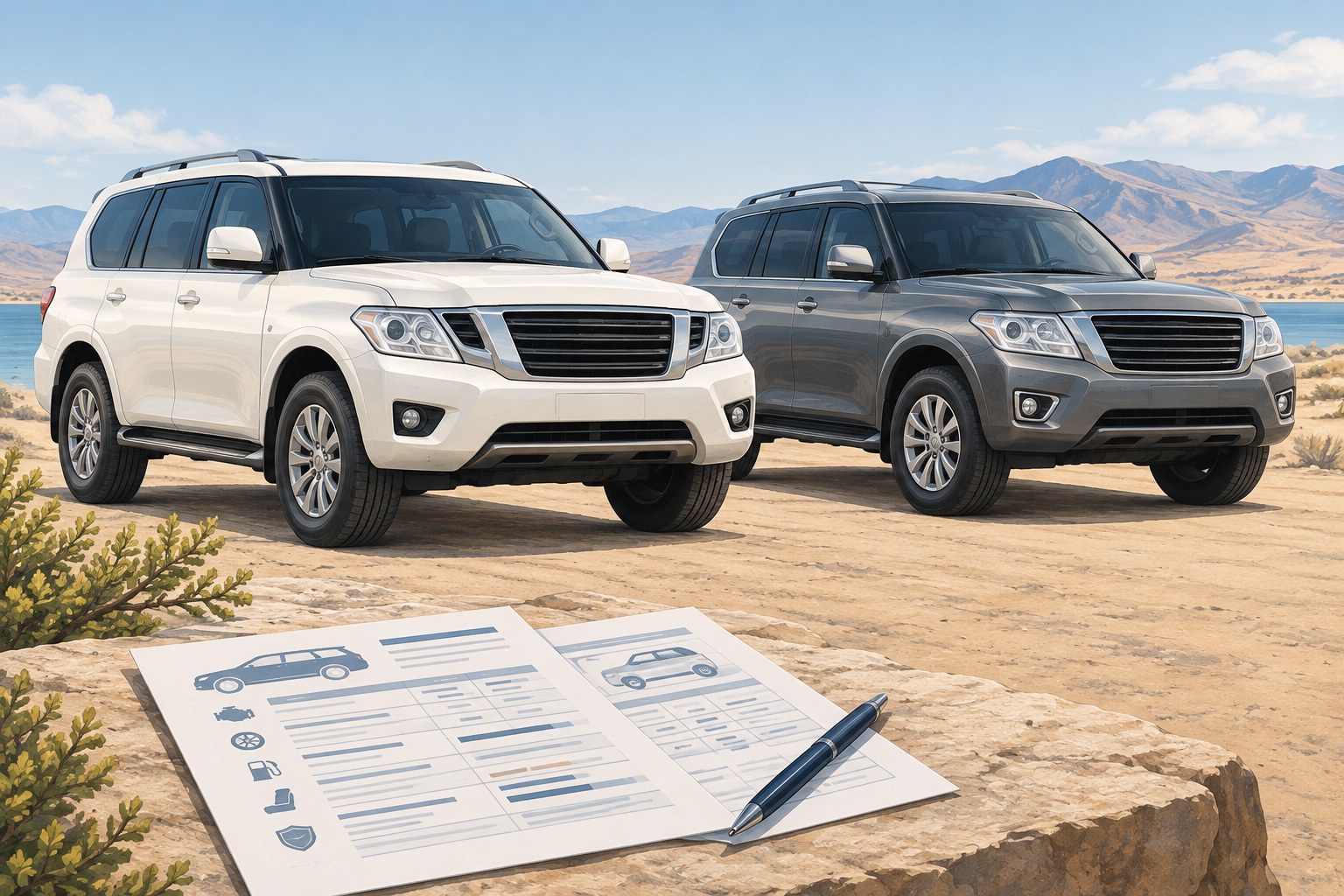
AI-generated editorial illustration; not photographs of actual Jaftim vehicles.
What do “320” and “400” mean on a used Patrol?
Nissan’s Costa Rica Patrol specification sheet identifies a VK56DE V8 rated at 320 hp and 526 Nm. A separate Nissan export brochure lists a lower-output SE at 317 hp alongside an LE rated at 400 hp. These documents show why similar adverts can use different figures: you need the brochure applicable to the actual vehicle, rather than treating “320” as a universal specification.
The higher-output V8 is documented in Nissan’s 2016 regional brochure as the VK56VD, with Variable Valve Event and Lift and direct petrol injection. That brochure lists 400 hp and 560 Nm. Use the original engine designation and vehicle records to establish the version; do not identify it from a seller’s horsepower description alone.
Nissan’s Costa Rica specification sheet, the Nissan SE/LE export brochure and the 2016 regional Patrol brochure are reference examples, not a specification guarantee for every UAE car.
A useful comparison starts with the exact specification
| What to compare | Lower-output V8 reference | Higher-output V8 reference |
|---|---|---|
| Engine identification | VK56DE in the Costa Rica sheet | VK56VD in the 2016 regional brochure |
| Published power | 320 hp in the Costa Rica sheet; 317 hp in the SE export example | 400 hp in the regional brochure |
| Published torque | 526 Nm in the Costa Rica sheet | 560 Nm in the regional brochure |
| Transmission example | Five-speed automatic for SE in the export brochure | Seven-speed automatic for LE in the export brochure |
| What still needs checking | Actual year, market, original equipment and modifications | Actual year, market, original equipment and modifications |
The transmission entries describe those brochure examples. They are not a rule for every Patrol advertised with either number. Ask for the vehicle’s original specification and verify it with a Nissan dealer or qualified specialist when the paperwork is unclear.
When the 400 specification deserves a place on your shortlist
The higher published output is relevant if you want to assess how a Patrol responds with passengers, luggage or on your normal highway journeys. It is a reason to compare suitable examples, not a substitute for a test drive or an inspection.
Test each candidate on a comparable, legal route after it reaches normal operating temperature. Assess smooth acceleration, ordinary gear changes, braking and steering. Check that the air conditioning and the equipment you actually need work properly. Ask a qualified inspector to investigate anything inconsistent rather than accepting an explanation based only on the model badge.
If the higher-output vehicle costs more, write down what the premium buys: documented specification, condition, maintenance history and equipment. A larger number in the advert does not justify overlooking missing records or an unresolved mechanical concern.
When a lower-output example may still be worth considering
A lower-output vehicle can remain a sensible candidate when its verified specification suits your use and its condition is well documented. Compare it against your real requirements: passenger access, parking, luggage, daily routes and the budget remaining after purchase.
For example, imagine two equally priced Patrols. One has a clear specification record, consistent service invoices and a satisfactory independent inspection. The other is described as “400” but has unexplained modifications and gaps in its history. The first deserves serious consideration; the output claim does not resolve the second vehicle’s uncertainties.
This is a decision method, not a reliability ranking. Neither badge establishes how a particular used car has been maintained or driven.
Compare fuel and ownership costs without guessing
Do not assume the lower-output version will always cost less to run, or that the higher-output version will use a fixed amount more fuel. A useful estimate needs evidence for the exact model and realistic assumptions about your mileage and journeys.
Use a transparent worksheet: annual kilometres divided by 100, multiplied by a supported litres-per-100-kilometres estimate, then multiplied by the relevant fuel price. Keep the date and source beside each input. If reliable consumption evidence is unavailable, compare a range of assumptions instead of publishing one confident figure.
Ask for insurance quotations and obtain an independent estimate for any work identified during inspection. Confirm the required fuel and maintenance specifications in the correct owner’s manual. Leave money for initial servicing and unresolved wear items rather than spending the full budget on the advertised purchase price.
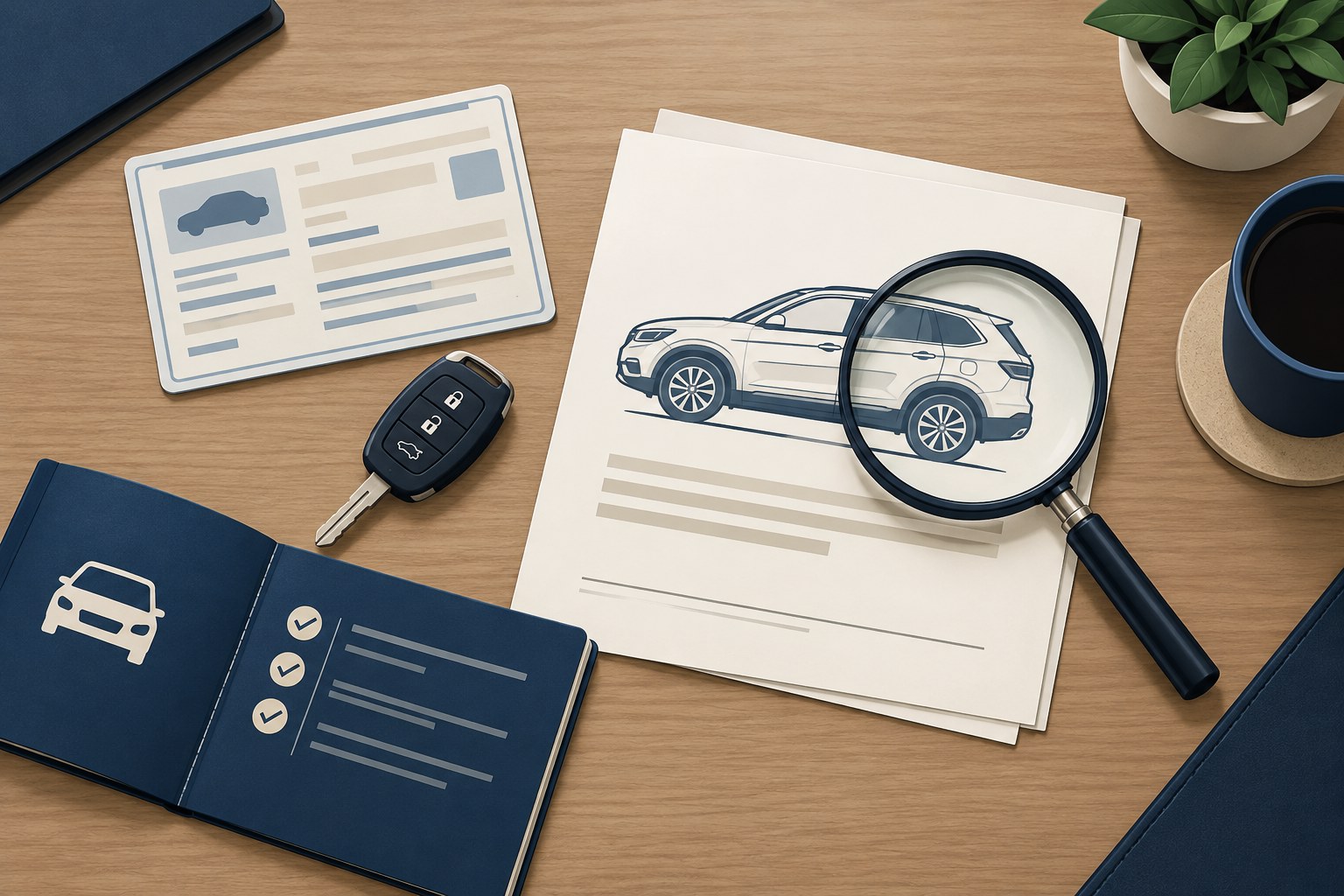
AI-generated illustration of the paperwork review; no actual vehicle documents are shown.
Check identity before judging trim or appearance
Start with the VIN, registration details and original-market documentation. Ask the seller to explain any mismatch between the advertised year, body appearance and recorded vehicle identity. A technician or dealer can help confirm the original specification where the documents are incomplete.
Check each advertised feature individually. Do not assume an engine-output label guarantees a particular suspension system, camera package, seat arrangement or driver-assistance feature. Equipment differs between years and markets, and a used vehicle may have been modified.
For a vehicle with replacement exterior parts, request the work history and parts documentation. Separate cosmetic changes from any claimed engine or transmission work. Jaftim’s explanation of car facelifts provides background on appearance changes; the individual vehicle still needs verification.
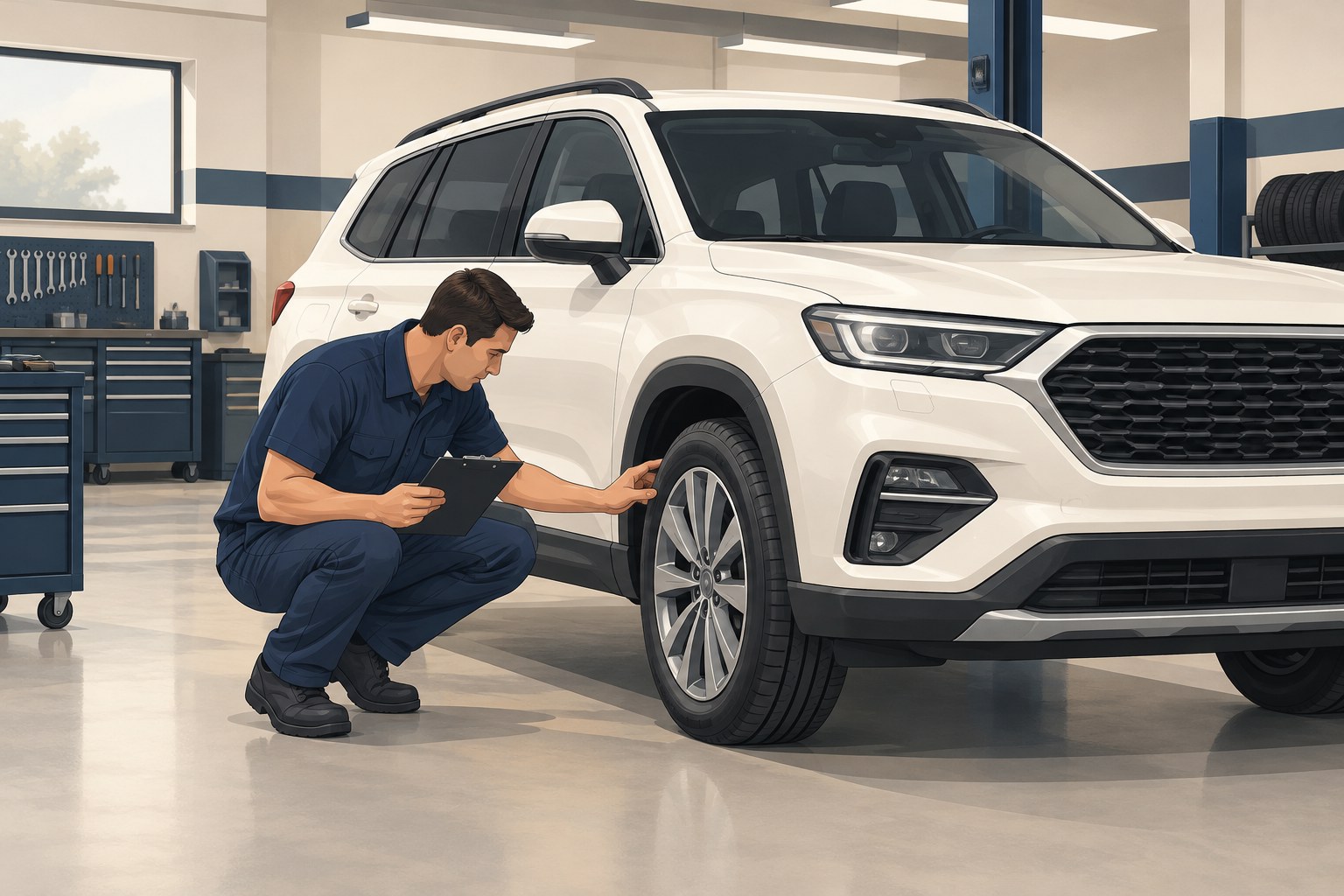
AI-generated illustration of an independent inspection; not a Jaftim inspection or certification.
A pre-purchase checklist for either version
- Verify identity: match the VIN and vehicle records, and confirm the original market and specification.
- Review history: request dated servicing and repair invoices, not just a verbal description of maintenance.
- Arrange an independent inspection: ask a qualified specialist to assess the engine, transmission, cooling system, brakes, tyres, suspension and underbody.
- Check modifications: document replacement bodywork, aftermarket equipment and any claimed mechanical changes.
- Test the equipment: operate the features that matter to you, including cabin cooling and seating functions.
- Assess four-wheel-drive equipment professionally: have its operation checked in suitable conditions, following the correct manual.
- Get the findings in writing: record necessary work, further checks and the basis for any repair estimate.
Ask for evidence when statements such as “accident-free,” “original mileage” or “fully maintained” affect your decision. An advert or inspection cannot automatically establish every part of a vehicle’s history.
Keep newer Patrol engines out of this comparison
This guide concerns older V8 specifications. Nissan’s September 2024 announcement describes a newer-generation Patrol with 3.8-litre and 3.5-litre twin-turbo V6 choices. Do not apply the older “320 vs 400” comparison to those vehicles, or confuse it with every V6-versus-V8 comparison.
When an advert mixes a recent-looking body with an older registration year, return to the identity and engine documentation. Nissan’s new-generation announcement helps distinguish that separate model range.
Which Patrol should you choose?
Choose the verified vehicle that meets your use case, passes an appropriate inspection and leaves a workable ownership budget. Shortlist the higher-output specification if its documented characteristics matter to you; keep a well-documented lower-output example in consideration if it meets your needs.
You can use Jaftim’s Nissan Patrol listings to begin comparing vehicles. Confirm each candidate’s specification, condition and availability with the seller before making a commitment. Compare the actual cars first, then decide how much weight the horsepower difference deserves.